 Stetho Cases
Murmur grading: the Levine scale I to VI
The Levine scale grades a systolic murmur from I to VI by loudness. Grade I is heard only after careful listening, II is faint but immediate, III is loud without a thrill, IV is loud with a palpable thrill, V is heard with only the rim of the stethoscope on the chest, and VI with the stethoscope just off the chest. The thrill begins at grade IV.
| Grade | Loudness | Thrill |
|---|---|---|
| I/VI | Heard only after listening carefully for some time | No |
| II/VI | Faint, but heard at once | No |
| III/VI | Loud, easily heard | No |
| IV/VI | Loud | Yes |
| V/VI | Heard with only the rim of the stethoscope touching the chest | Yes |
| VI/VI | Heard with the stethoscope lifted just off the chest | Yes |
Hear grade II and grade III
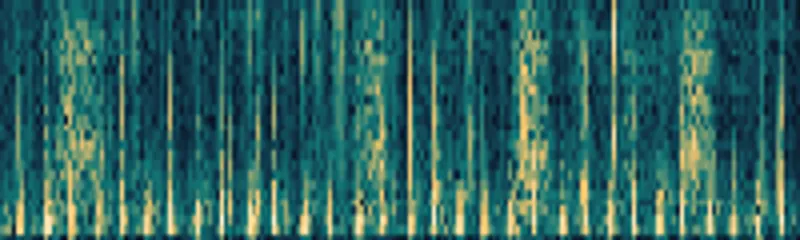 800 Hz
Source: CirCor DigiScope, ODC-By 1.0; cut, filtered and levelled.
 800 Hz
Source: CirCor DigiScope, ODC-By 1.0; cut, filtered and levelled.
Loudness on a recording depends on the device and the chest wall, so judge the murmur against that patient’s own S1 and S2. Grade it where it is loudest.
Sources
- Freeman AR, Levine SA. The Clinical Significance of the Systolic Murmur. Annals of Internal Medicine. 1933;6:1371-1385.
- Oliveira J, Renna F, Costa P, et al. The CirCor DigiScope Dataset: From Murmur Detection to Murmur Classification. IEEE Journal of Biomedical and Health Informatics. 2022;26:2524-2535.