 Stetho Cases
Hear it, name it, see why.
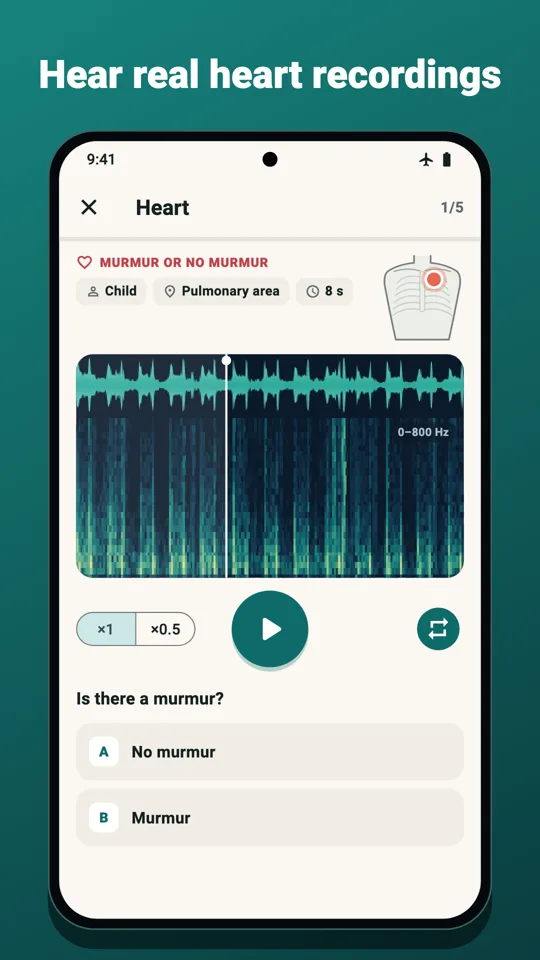
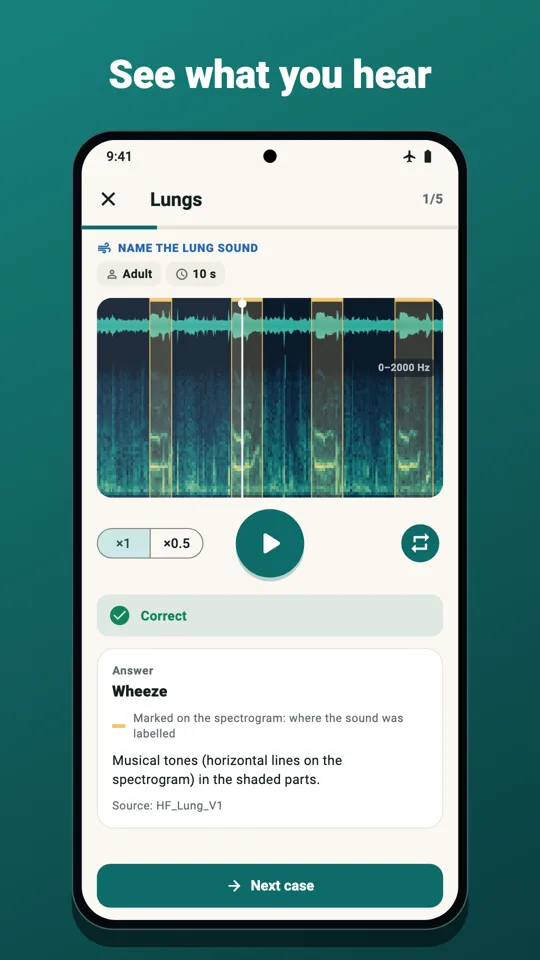
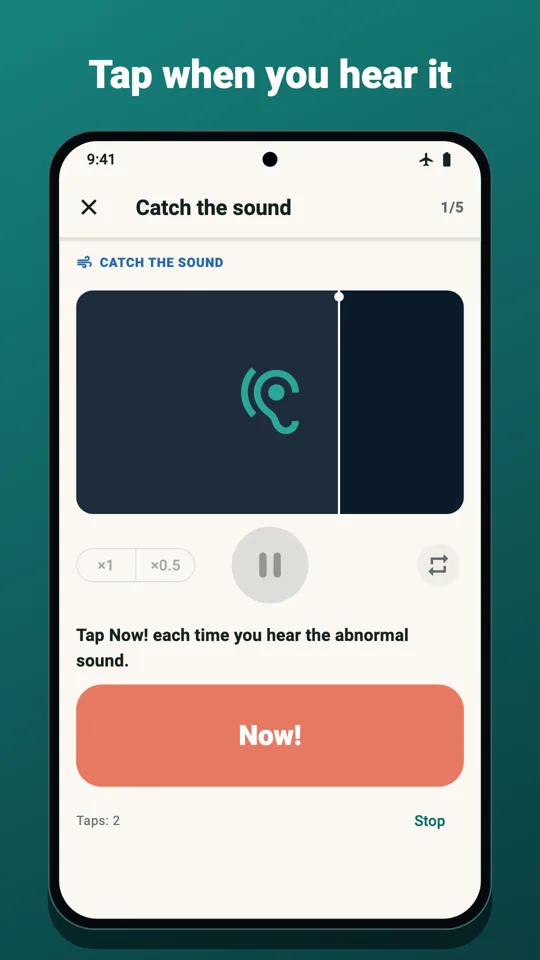
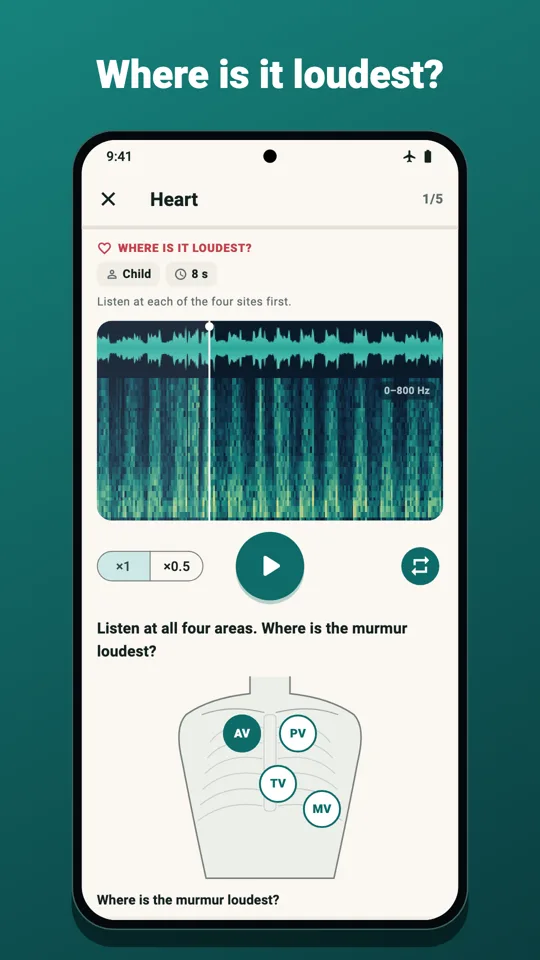
Heart and lung sounds you can play and compare: real recordings from children and adults, plus teaching recordings, each with a spectrogram that shows what your ear should catch. The Stetho Cases app turns them into daily auscultation practice on 1,904 cases.
Stetho Cases is coming to Google Play
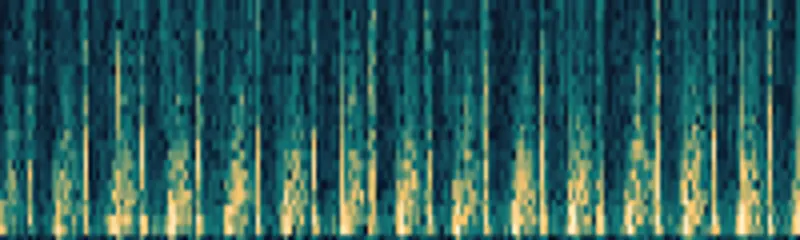 800 Hz
Source: CirCor DigiScope, ODC-By 1.0; cut, filtered and levelled.
Heart sounds
- Normal S1 and S2What normal S1 and S2 sound like, which is louder where, and how to tell systole from diastole.
- Split S2What a split S2 sounds like, why it widens on inspiration, and what a wide or fixed split points to.
- S3 gallopS3 is a low, dull sound just after S2, heard with the bell at the apex.
- S4 gallopS4 is a low sound just before S1, from atrial contraction into a stiff ventricle.
- Mid-systolic clickA mid-systolic click is a short, sharp sound between S1 and S2, typical of mitral valve prolapse.
Heart murmurs
- Holosystolic murmurA holosystolic murmur fills all of systole from S1 to S2: mitral or tricuspid regurgitation, or a ventricular septal defect.
- Mid-systolic (ejection) murmurA mid-systolic ejection murmur rises and falls between S1 and S2: aortic or pulmonic outflow, or an innocent flow murmur.
- Early systolic murmurAn early systolic murmur starts with S1 and stops well before S2.
- Late systolic murmurA late systolic murmur begins in mid to late systole, often after a click, and runs up to S2.
- Early diastolic murmurAn early diastolic murmur is a soft, high, blowing sound that starts at S2 and fades.
- Opening snap and diastolic rumbleMitral stenosis gives a sharp opening snap after S2 and a low diastolic rumble at the apex.
Lung sounds
- Normal (vesicular) breath soundsVesicular breath sounds are soft and rustling, with inspiration longer than expiration.
- WheezeA wheeze is a continuous musical sound, usually on expiration.
- RhonchiRhonchi are low-pitched, snoring continuous sounds that may clear after coughing.
- StridorStridor is a loud, high-pitched sound from the upper airway, usually on inspiration and often heard without a stethoscope.
- Fine cracklesFine crackles are short, high popping sounds late in inspiration, like hair rubbed between the fingers.
- Coarse cracklesCoarse crackles are louder, lower, bubbling pops, often early in inspiration, that may change after a cough.
- Pleural friction rubA pleural friction rub is a creaking, leathery sound in both phases of breathing that does not change with coughing.
Often confused
- Wheeze vs rhonchi
- Crackles vs rhonchi
- Fine vs coarse crackles
- Stridor vs wheeze
- S3 vs S4 heart sounds
- Holosystolic vs ejection murmur
Guides
The app