 Stetho Cases
Coarse crackles: what they sound like, with real audio
Coarse crackles are louder, lower and longer popping sounds than fine crackles, like bubbles. They are often heard early in inspiration and may also be heard on expiration. They come from secretions in larger airways and can change or clear partly after coughing. Typical settings are bronchitis, bronchiectasis and COPD.
Listen
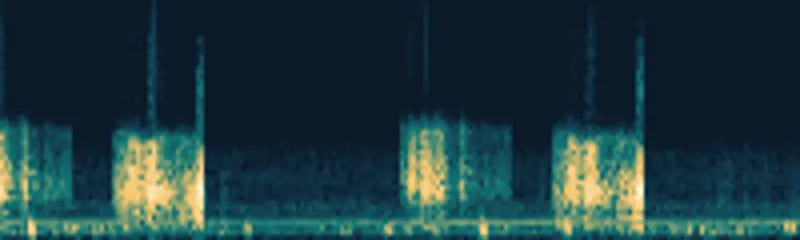 2000 Hz
Source: HLS-CMDS, CC BY 4.0; cut, filtered and levelled.
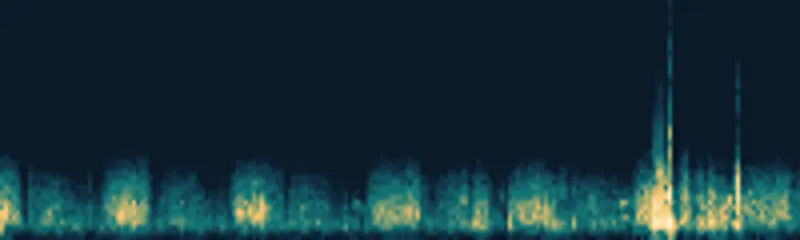 2000 Hz
Source: SPRSound, CC BY 4.0; cut, filtered and levelled.
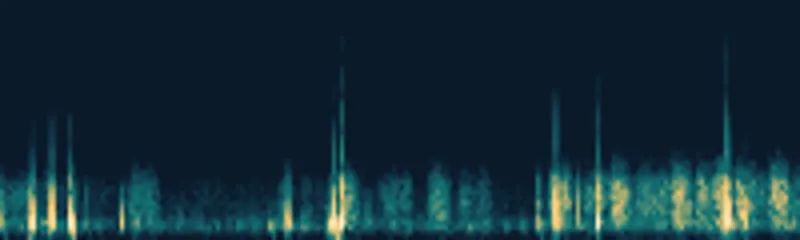 2000 Hz
Source: SPRSound, CC BY 4.0; cut, filtered and levelled.
Coarse crackles at a glance
| Type | Discontinuous |
|---|---|
| Pitch | Low, louder, longer |
| Timing | Early inspiration; sometimes expiration |
| Effect of cough | May change or partly clear |
| Spectrogram | Thicker vertical lines reaching lower frequencies |
| Common causes | Bronchitis, bronchiectasis, COPD |
How to recognise it
- Think bubbles rather than rubbed hair.
- Note the time in the breath: early points to coarse, late to fine.
- Listen again after a cough.
Easily confused with
- Fine crackles: Fine crackles (fine rales) are soft, high-pitched, very short popping sounds, usually late in inspiration, like hair rubbed between the fingers near the ear.
- Rhonchi: Rhonchi are continuous, low-pitched sounds like snoring or gurgling, made by secretions or narrowing in the larger airways.
- Crackles vs rhonchi
- Fine vs coarse crackles
Sources
- Bohadana A, Izbicki G, Kraman SS. Fundamentals of Lung Auscultation. New England Journal of Medicine. 2014;370:744-751.
- Zhang Q, et al. SPRSound: Open-Source SJTU Paediatric Respiratory Sound Database. IEEE Transactions on Biomedical Circuits and Systems. 2022;16:867-881.
- Pasterkamp H, Brand PLP, Everard M, et al. Towards the standardisation of lung sound nomenclature. European Respiratory Journal. 2016;47:724-732.