 Stetho Cases
S4 heart sound (atrial gallop): what it sounds like, with audio
S4 is a low extra sound late in diastole, immediately before S1, made when the atrium contracts into a stiff ventricle. The rhythm is often taught as “Ten-nes-see”. It is linked to left ventricular hypertrophy and other causes of a stiff ventricle. It is absent in atrial fibrillation, because there is no organised atrial contraction.
Listen
 800 Hz
Source: University of Michigan Heart Sound and Murmur Library, CC BY-SA 4.0; cut, filtered and levelled.
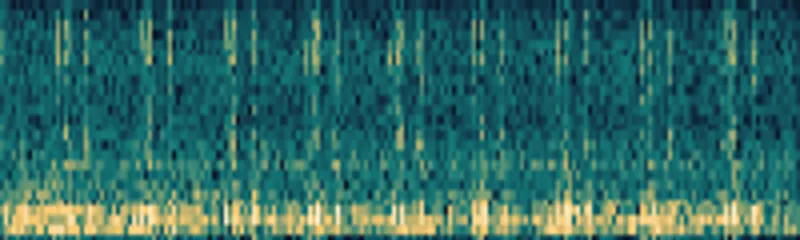 800 Hz
Source: HLS-CMDS, CC BY 4.0; cut, filtered and levelled.
S4 gallop at a glance
| Timing | Late diastole, immediately before S1 |
|---|---|
| Pitch | Low |
| Where | Apex, patient in left lateral position |
| Chestpiece | Bell, light pressure |
| Rhythm cue | Ten-nes-see |
| Other names | Atrial gallop, presystolic gallop |
| Linked to | Stiff or hypertrophic ventricle, for example left ventricular hypertrophy |
| Never in | Atrial fibrillation |
How to recognise it
- Listen to the moment before S1: an S4 makes S1 sound doubled with a low first part.
- A split S1 has two sharp parts; with S4 the first part is low and dull.
- If the pulse is irregularly irregular, look for another explanation: atrial fibrillation has no S4.
Easily confused with
- S3 gallop: S3 is a low, dull extra sound early in diastole, about 0.12 to 0.18 seconds after S2, made by rapid filling of the ventricle.
- Normal S1 and S2: A normal heartbeat has two short sounds.
- S3 vs S4 heart sounds