 Stetho Cases
Wheeze: what it sounds like, with real audio
A wheeze is a continuous, musical, high-pitched lung sound, usually loudest on expiration, made by air moving through narrowed airways. It is typical of asthma, COPD and bronchiolitis. On a spectrogram it appears as one or more thin horizontal lines, unlike crackles, which are thin vertical lines.
Listen
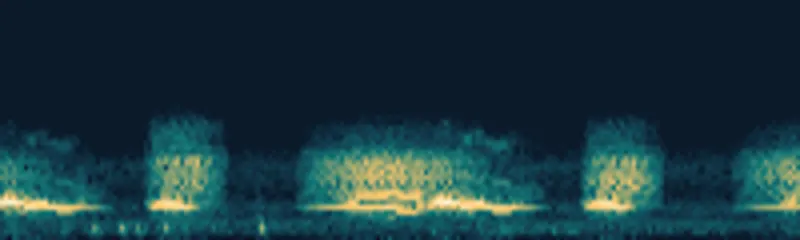 2000 Hz
Source: HLS-CMDS, CC BY 4.0; cut, filtered and levelled.
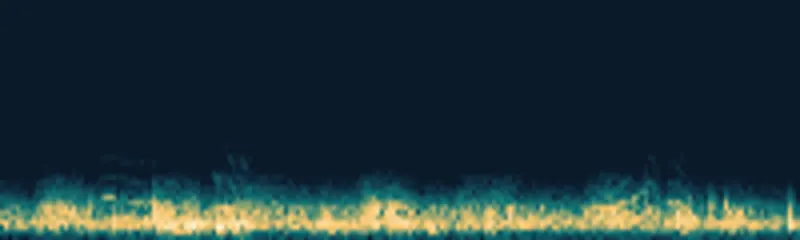 2000 Hz
Source: SPRSound, CC BY 4.0; cut, filtered and levelled.
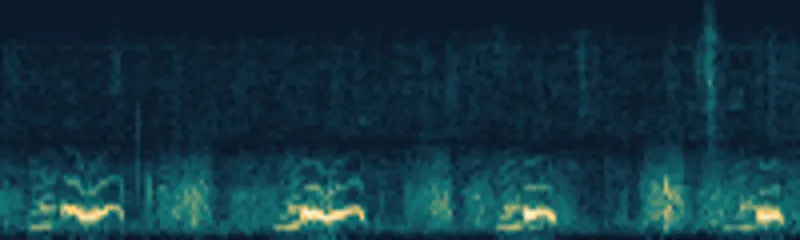 2000 Hz
Source: HF_Lung_V1, CC BY 4.0; cut, filtered and levelled.
 2000 Hz
Source: HF_Lung_V1, CC BY 4.0; cut, filtered and levelled.
Wheeze at a glance
| Type | Continuous, musical |
|---|---|
| Pitch | High; older definitions put it above 400 Hz |
| Timing | Usually expiration, can be both |
| Duration | Longer than a quarter of a second in the classic definition |
| Spectrogram | Horizontal lines |
| Common causes | Asthma, COPD, bronchiolitis |
How to recognise it
- If you could hum it, it is a wheeze.
- Note whether one pitch or many are heard, and whether it is in one place or everywhere.
- Check the neck: if it is loudest there and on inspiration, think of stridor.
Easily confused with
- Rhonchi: Rhonchi are continuous, low-pitched sounds like snoring or gurgling, made by secretions or narrowing in the larger airways.
- Stridor: Stridor is a loud, high-pitched sound from a narrowed upper airway (larynx or trachea).
- Wheeze vs rhonchi
- Stridor vs wheeze
Sources
- Bohadana A, Izbicki G, Kraman SS. Fundamentals of Lung Auscultation. New England Journal of Medicine. 2014;370:744-751.
- Pasterkamp H, Brand PLP, Everard M, et al. Towards the standardisation of lung sound nomenclature. European Respiratory Journal. 2016;47:724-732.
- Hsu FS, Huang SR, Huang CW, et al. Benchmarking of eight recurrent neural network variants for breath phase and adventitious sound detection: HF_Lung_V1. PLOS ONE. 2021;16:e0254134.
- Zhang Q, et al. SPRSound: Open-Source SJTU Paediatric Respiratory Sound Database. IEEE Transactions on Biomedical Circuits and Systems. 2022;16:867-881.