 Stetho Cases
How to describe a heart murmur: seven features
Describe a murmur by seven features: timing (systolic or diastolic, and which part), location (where it is loudest), radiation, shape (plateau, crescendo, decrescendo, diamond), pitch, quality (blowing, harsh, rumbling) and grade (Levine I to VI). Timing comes first, because it narrows the causes most.
The seven features
| Timing | Early, mid, late or holosystolic; early diastolic or rumble |
|---|---|
| Location | Aortic, pulmonic, tricuspid or mitral area |
| Radiation | For example to the neck or the axilla |
| Shape | Plateau, crescendo, decrescendo, diamond |
| Pitch | High, medium, low |
| Quality | Blowing, harsh, rumbling, musical |
| Grade | I to VI on the Levine scale |
An example, described
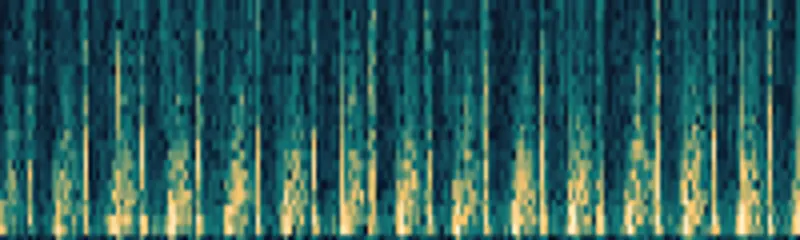 800 Hz
Source: CirCor DigiScope, ODC-By 1.0; cut, filtered and levelled.
This child’s recording is labelled in the dataset as a mid-systolic, diamond-shaped, high-pitched, harsh murmur, grade III/VI.
Practise by timing
- Holosystolic murmur
- Mid-systolic (ejection) murmur
- Early systolic murmur
- Late systolic murmur
- Early diastolic murmur
- Opening snap and diastolic rumble
Sources
- Oliveira J, Renna F, Costa P, et al. The CirCor DigiScope Dataset: From Murmur Detection to Murmur Classification. IEEE Journal of Biomedical and Health Informatics. 2022;26:2524-2535.
- Freeman AR, Levine SA. The Clinical Significance of the Systolic Murmur. Annals of Internal Medicine. 1933;6:1371-1385.
- Judge R, Mangrulkar R. Heart Sound and Murmur Library. University of Michigan, Open.Michigan, 2015.